Modern Poetry Reboot: Poetry Unbound

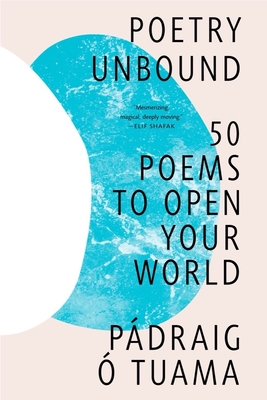
Cover of the book Poetry Unbound

One of the things I noticed before I retired was that I found myself reading and re-reading the same poets. Classic poets, Romantic Era poets, Whitman, Dickenson, Pound, Eliot, Rimbaud, Beat Poets, etc. I needed to really up my game and refurbish my poetic brain. There are living poets that I love: Gillian Conoley, D.A. Powell, Trane Devore and others. But I haven’t really expanded that circle in twenty years. I set out to do that with “American Hybrid: A Norton Anthology of New Poetry” which is good (D.A. Powell is in there). I would recommend that for anyone interested in new poetry. One remarkable collection I came across was Pádraig Ó Tuama‘s “Poetry Unbound: 50 Poems to Open Your World.” The very title sounded like just the thing I needed to do going into my 65th year. What is great about this anthology is that you get a very intimate look into how Ó Tuama experiences the poetry. Each poem includes a personal reflection, the poem, and then his own teasing out of the poem’s context and meaning(s) in a short essay. You learn as much about the anthologist as you do the poetry. Ó Tuama is a poet, theologian, and conflict mediator from Cork, Ireland.

One of the reasons I decided to focus on Bluesky as a social media platform is that I found that there were a lot of writers active there. So reading, writing, and connecting with others is a part of that project.

Posted in poetry | Tagged , , | Leave a comment

Culture is Fun Until Someone Loses an Eye!

I found a great book in the library discard pile called “Art, Society, and Accomplishments: A Treasury of Artistic Homes, Social Life and Culture” edited by R. Barry Blackburn of the Blackburn Company, Chicago. It is an illustrated Victorian-era etiquette guide, cultural treasury, and “self-help” book focusing on social skills, upper-class lifestyle, and decorum for the elite and wanna-be elite of Chicago society. It was edited and distributed just before the start of the historic Chicago World’s Fair (World’s Columbian Exposition). I thought R. Barry Blackburn was a furniture company or something, but no, this was it! He sold books on society, arts, and culture by subscription. He employed door-to-door traveling agents and salesmen who used prospectus sample books to secure orders from middle- and upper-class families across the country before final delivery.

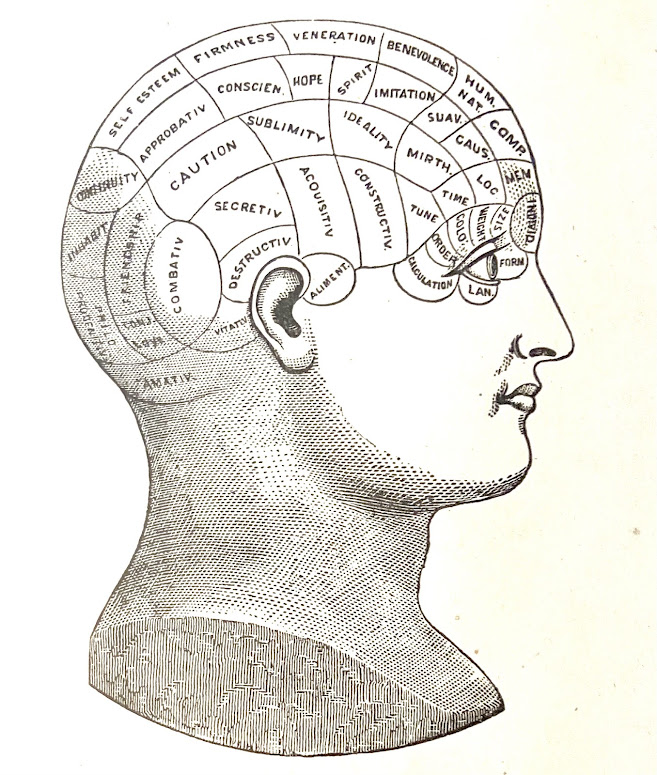
Phrenology bustSo this book has multiple chapters on reciting things, putting on plays, magic tricks, flowers, chinese art, how to dress for a fancy ball: all the things you need to do in order to pass the time in an upper-middle class house before the invention of radio. My two favorite chapters though are the one on phrenology and the one on fencing. The one on phrenology is priceless because it takes it at face value as a science and a branch of psychology/sociology. Phrenology tells us that you are not fat because of genetics or eating habits but because you have an overdeveloped cerebral “organ” called Alimentiveness, combined with specific structural imbalances in their bodily “temperaments.” The skull is scientifically mapped out and the lumps and fissures in your skull reveals all.

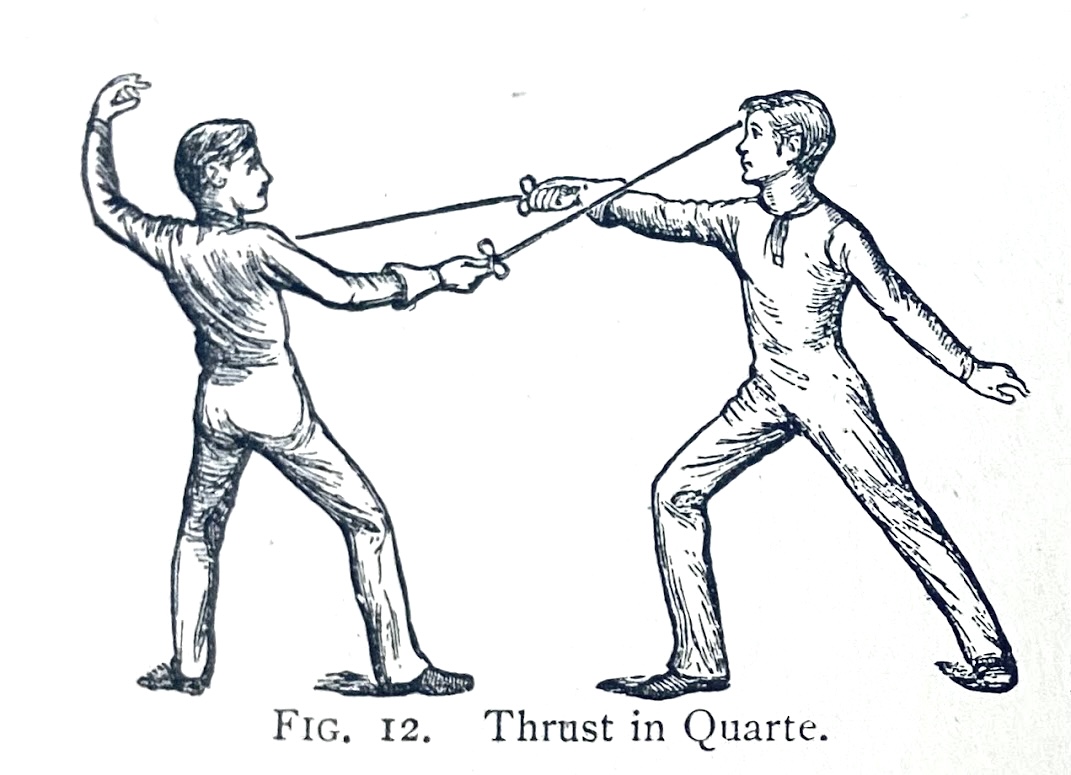
The fencing chapter is a hoot because there is NO protective equipment mentioned in the text or included in the illustrations. I guess they are wearing a gauntlet of some kind but someone is definitely losing an eye! This is an example of a chapter where I am asking myself “why?” – why fencing instead of tennis, badminton, croquet? I think even lawn darts or running with scissors is safer than this.

I have to admit that I admire this selling books by subscription business. It is much like what happens today with Lulu.com and Lightning Press and other print on demand services. I think it would be a great piece of performance art to have a novelist go door to door with swatches of the novel and order forms. A lot of books used to be sold that way: encyclopedias, dictionary sets, illustrated family bibles, home remedy manuals, instructional texts for farmers outlining soil management, crop cycles, and veterinary care, cookbooks, richly illustrated volumes documenting the Civil War or the Spanish-American War, which were heavily marketed to veterans and their families. And the whole cultural project of what we expect ourselves to do and think as “civilized” people extended into the whole “Great Books” sets that were heavily marketed from door-to-door in the 50s. They swore to parents that if their child read the set of books that it would almost guarantee their admission into elite colleges. The tactics from the “Great Books of the Western World” sales force were so aggressive and shady that it led to FTC legislation that basically killed the sales method. Still, my next novel will be guaranteed not to rust, bust, or collect dust and will soon be available in your choice of three deeply religious colors.

Posted in random | Tagged , , , , , | Leave a comment

Whose Odyssey is This?

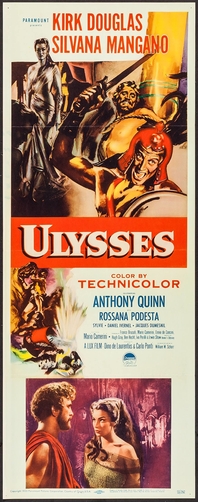
Ulysses 1954 movie posterI went to see Nolan’s Odyssey. And let’s get real here: it is Nolan’s Odyssey just as Emily Wilson’s Odyssey is hers, and Fagle’s is his. I did not go to the movie expecting a “faithful” translation of what we call Homer’s Odyssey. I was a huge fan of sword and sandals flicks as a kid: it doesn’t get any better than Jason and the Argonauts, The 300 Spartans, the old Hercules flicks or Spartacus. I showed up at the South Center Mall IMAX theater ready to be entertained (or at least hoping to be). It ticked all the boxes for me: swords, sandals, big battles, vague connection to a classical text, exotic scenery, storms, more battles, bows and arrows, spear fu, shield fu and chair fu.

Were there things that were annoying and distracting?  Sure. In the theater I was in, it was too damn loud. The inclusion of other books (people and tropes from the Aeneid), missing and combined sequences from the text, missing people, and as Mary Beard also pointed out – complete lack of sex or humor which the book has plenty (but there were things that Mary Beard, one of my favorite classical scholars, liked about the movie). Despite the peculiarities and changes, what we have is Nolan’s film. It is a movie. It is not an analysis in Classical World, it is not a presentation or record of a book. Nolan is doing something that people have been doing for 2500 years and that is responding to art by creating art. If we measure art’s greatness by the creative response it engenders, then Homer’s Odyssey is just that: great art. All of the great translations throughout the centuries, all of the incredible retelling of the stories throughout many media including prose, more poetry, music, opera, James Joyce, etc. have not diminished the work of Homer but added to it.

I was disappointed in Emily Wilson’s response to the film. She has created a new translation of the Odyssey which I am looking forward to reading. She has a different project than Nolan. She has to cover the whole text because she is translating a text. And she has to make decisions, obviously, based on her experience, education, and viewpoints. I think it is unfair of her to expect so much from a 2.5 hour film made by a filmmaker. But my disappointment is assuaged when I remember that she is a classical scholar and not a film critic. It is just as unfair of me to expect expert film criticism from a classical scholar as it is for the classical scholar to expect philological expertise from a filmmaker. Wilson should go back and look at the countless retellings of the Odyssey: I think she would see that their value is mostly what they tell us about the time the retelling was told rather than anything really concise about the text.

To make that point, Dr. Emily Hauser at the National Gallery, made a great little video to talk about the painting “Penelope and the Suitors,” by Pintoricchio (1509). It is really worth a look because it is one of those marvelous paintings that captures a scene from a poem and then catches you up on the whole story in the background. The painter does not try to figure out what ancient Greeks must have looked like or wore: The whole painting is in Pintoricchio’s contemporary Italy. His painting provides a number of beats from the text but does not bother to cover the whole thing due to the values and limitations of Pintoricchio’s milieu.  But if you know enough of the story, by looking at the background, you can fill it all in as if the painting was a mnemonic tool for story-telling. I love when renaissance painters do this – it is like an early form of hypertext. Another great example is Hans Memlings “Tafel mit Szenen der Passion Christi“ where the crucifiction is central but in the background, the whole of the painting follows the story of the passion of the Christ.

My interest in Homer started when I was young with my interest in mythology, languages (Greek and Latin), and later, reading in archetypal literary criticism. From and Jungian perspective, the female characters are absolutely critical to the text (see also Joseph Campbell’s “Hero with a Thousand Faces”), so yes, there were things that I missed, but I am thrilled that so many people are returning to Homer.

Note: I saw the movie with Jacqui and she liked the film except she was put off by the puppet dog. She said “right in the middle of it, they go full Jim Hensen” putting real actor dogs out of work. Spoken like a true labor leader!


Posted in film | Tagged , , , , , , , | Leave a comment

Do We Need Another Dickinson?

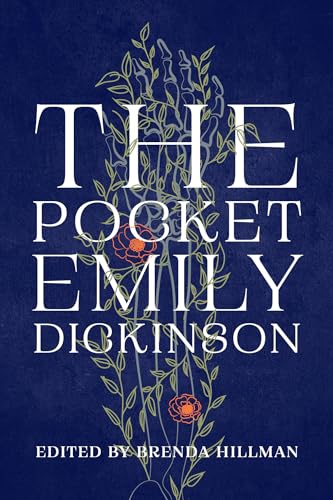
The cover of "The Pocket Emily Dickinson, edited by Brenda Hillman"I recently picked up a copy of The Pocket Emily Dickinson, edited by Brenda Hillman. This is a third edition. It was first published by Shambala Press as part of their “Shambhala Pocket Classics” series. There are a number of scholarly editions of selections and complete poetry of Emily Dickinson out there. There is a lot to roil through in other tomes as to what edition represents the real text: textual notes, emendations, and redactions already fill volumes and chapters of other editions. I have been sitting with this one since March (2026), and I think this collection is special for a number of reasons but mainly the selection of poems and the selector.

Brenda Hillman, the editor of this collection, is also a poet with eleven poetry collections under her belt published by Wesleyan University Press, including In a Few Minutes Before Later (2022). She was also an English professor at Saint Mary’s College of California. Her author bio at Shambala reads: “BRENDA HILLMAN is the author of over ten poetry collections, including Seasonal Works with Letters on Fire, Practical Water, and Pieces of Air in the Epic. Born in Arizona, Hillman is a graduate of both Pomona College and the Iowa Writers’ Workshop. She has received awards and fellowships from the National Endowment for the Arts, the Guggenheim Foundation, the Poetry Society of America, and more. Her 1993 collection Bright Existence was a finalist for the Pulitzer Prize.” So this is a lot of professional cred here but the thing that is important to me is that she is a practicing poet herself with an ear finely tuned to language, human experience, and the inner voice.

This edition does not ask you to study Dickinson, but to experience her work in a hundred of Dickinson’s best poems selected by Hillman. This curation of poetry sought out the “unique and gemlike lyrics…pure distillations of profound feeling and great intellect” and as the Shambala description claims, “they contain a world of imagination, observation, and precisely articulated spiritual and emotional experience.” These are the poems that you can come back to again and again. If you have studied Dickinson before, there are poems here that are old friends, and then seen in a different light in how they sit next to other poems. I would also recommend this as the edition you should get someone who is not a poet, English teacher, or scholar: this is Emily Dickinson freed from the burden of scholarship!

For myself, I picked this up in San Francisco on my birthday. I turned 65 and retired. I wanted some poetry to read that weekend and for some reason, I was irresistibly drawn to this book. So the answer is yes, we do need another Dickinson. I could not have chosen a better companion for the year.

Posted in poetry | 1 Comment

Elisions: Transcriptions of Life – a Contemplation

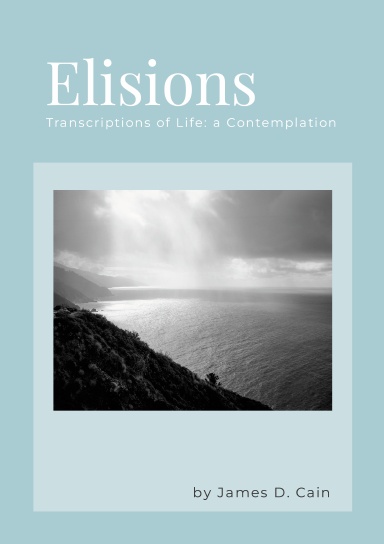
My dad, Jim Cain, has a second chapbook of poetry out called “Elisions: Transcriptions of Life – a Contemplation.” It is a short companion to his previous volume “Turquoise Laughter.” He did a poetry reading a few months ago at his assisted living place and it went really well. Several people came up to him afterwards and told him that his reading inspired them to start writing again. Not bad for 93!

The cover of the book "Elisions."

From the back of the book: Elisions: Transcriptions of a Life: a Contemplation gathers the poems of James D. Cain into a moving record of memory, loss, humor, wonder, family, and love. These poems speak from the spaces where life leaves things out: unfinished questions, remembered places, fading footsteps, old streets, childhood mysteries, desert heat, family departures, and the ache of a love that cannot be replaced. Written with directness and emotional honesty, the collection moves from playful reflection to grief, from Robert Frost’s diverging roads to an oasis in Abqaiq, from boys singing on street corners to a father imagining music with his son, from the freedom of geese to the loneliness of being left behind. At the heart of the book is a voice still asking what remains after time, distance, and death have left. These poems do not seek perfection so much as presence. They preserve the searching mind of a man attentive to the ordinary and the sacred, the funny and the painful, the remembered and the lost. Elisions is a contemplation of roads taken and not taken, of people who leave and people who stay within us, and of the fragments through which a life can still be heard.

Posted in poetry | Tagged , , | Leave a comment

Loeb Editions and a Great Penthouse

Jacqui called me into her office to read an article in the New York Times about Maurice Templesman’s penthouse being for sale:

The longtime Manhattan penthouse of Maurice Tempelsman, the Belgian-born diamond magnate who was Jacqueline Kennedy Onassis’s companion for more than a decade, is now on the market, nearly nine months after his death.

I thought it was a gorgeous place even for $5.5 million, so I was wondering why she wanted me to read the article. Huge rooms, great views and the deck outside has the same square footage as the apartment. Then J was watching me as I read it. I said “okay, I get it this place is gorgeous…” and she said “Go on, keep reading…” and then I scrolled down to this picture:

A fancy penthouse living room with fire place and a floor to cieling bookcase filled green and red books.

And then I saw it, I gasped. Jacqui smiled – she got me good. My jaw was on the ground. The green books are the Greek and the red ones are the Latin. I think the few white colored ones are first editions from 1910 or so. It looks like the inhabitant of this humble abode had the complete Loeb editions of classical literature. These are some of my favorites. Some of the translations are clunky but a decent crib, and the texts are fairly reliable.

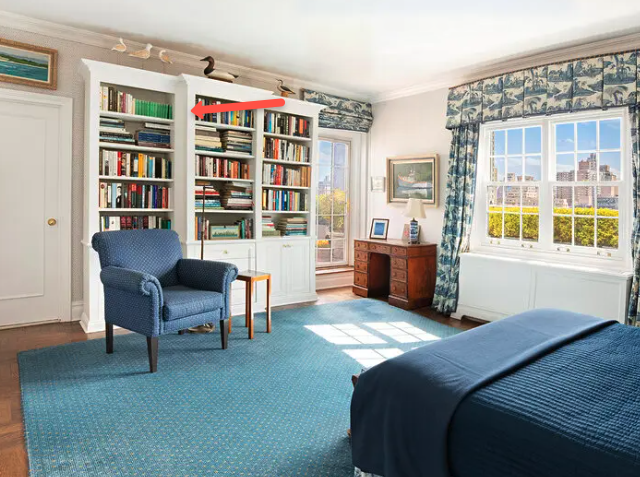
A picture from a bedroom has a dozen of the Greek:

Loeb editions in a top shelf of a bedroom.
Of course, I would love to know what texts warrant being in the bedroom.

I have fifty of these. The complete collection is something over 560 the last time I checked. They are published by Harvard University where the profits are used to fund student scholarships.  I have a very select collection based on my literary interests (Dante, Chaucer, Ezra Pound, etc.). I am no scholar – I prefer the Loeb over the Oxford because I am not a specialist. I don’t think I have paid full price for these except maybe for a few. I would comb the used bookstores in San Francisco and Berkeley for them. I never had money for this either so I would often trade for them. Later, when J and I were both working, I had more of a budget but the general rule was that discretionary funds were available as long as it was less than a Chanel lipstick (a somewhat mercenary measure I think). I was overjoyed when they would raise the price of their makeup now and again. I think with tariffs being what they are, a Chanel lipstick now goes for $50 and a Loeb edition is around $30.

I ran into a great quote from the Loeb website from Virginia Woolf on these books. In 1917 Virginia Woolf wrote (in The Times Literary Supplement):

The Loeb Library, with its Greek or Latin on one side of the page and its English on the other, came as a gift of freedom… The existence of the amateur was recognised by the publication of this Library, and to a great extent made respectable… The difficulty of Greek is not sufficiently dwelt upon, chiefly perhaps because the sirens who lure us to these perilous waters are generally scholars [who] have forgotten… what those difficulties are. But for the ordinary amateur they are very real and very great; and we shall do well to recognise the fact and to make up our minds that we shall never be independent of our Loeb.

I loved seeing these pictures because I think it helps J keep my collection of books in perspective. In theory, I have what I like to call a “working library” – the books are there to support on-going projects and interests. I don’t think I have lived up to that lofty goal because I have a lot of books that are currently focused on art and Europe in the 18th century for a couple of novels I am working on and then I have books that are just props for various gags: like a copy of “All About the Fonz.”

I have a few philosophical texts which are probably one of the most difficult things for me to even think of tackling in Greek or Latin. Philosophical terms are so specialized that really getting it requires access to a superior dictionary which is another thing all together. The one thing left in the Loeb library that I am interested in is the new editions that will be coming out of the Greek Anthology. The old version had all the sex taken out or translated into Latin instead of English.

Anyhow, if I was in New York, I would wheedle my way into a showing of this place just to check out what else this guy was reading!

Posted in literature | Tagged , , , , , | Leave a comment

Poem: What One Begins to See in the Stones

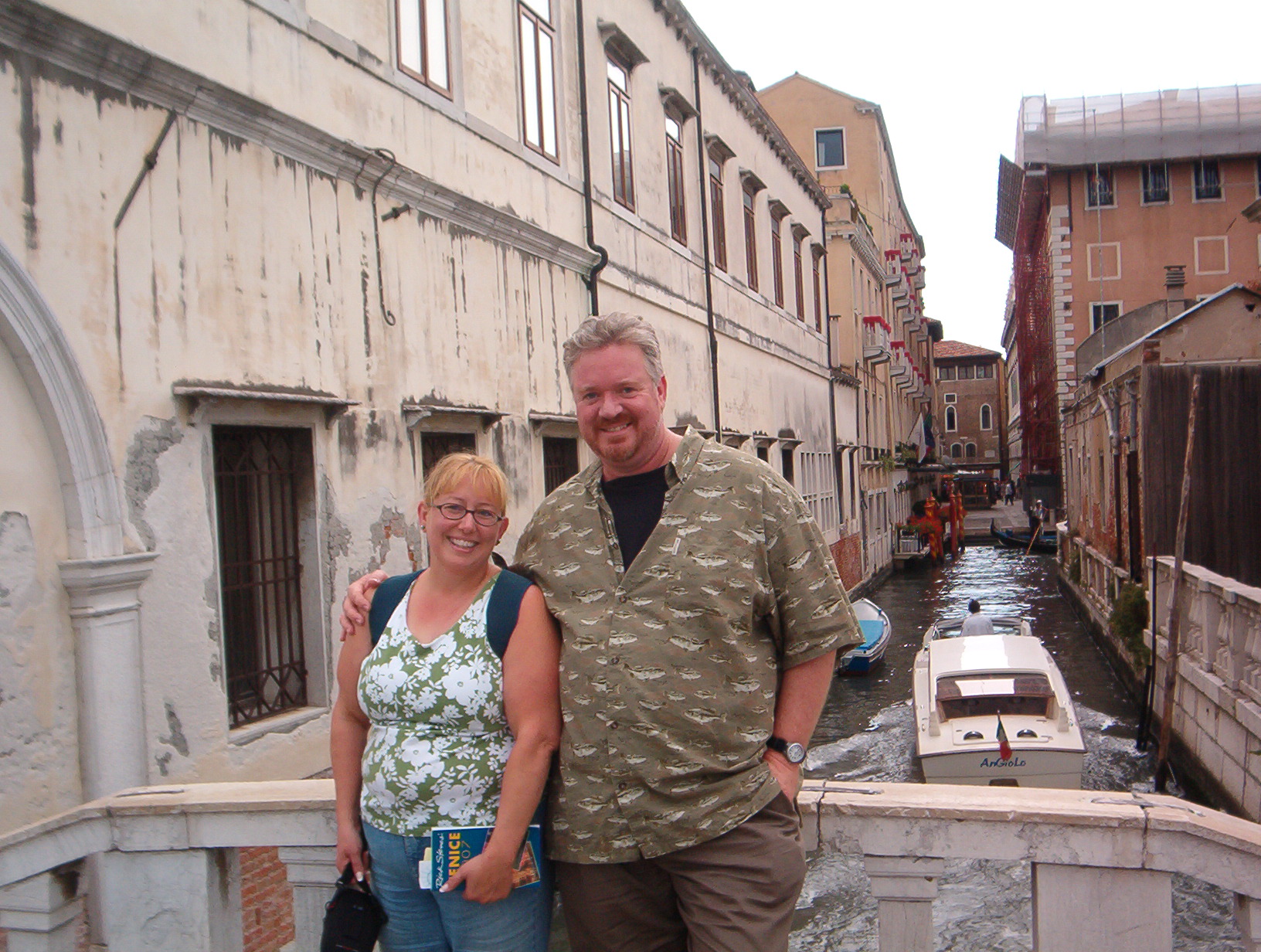
I can’t believe that I did not post this here, but I had a poem published “What One Begins to See in the Stones” in an online journal called Mediterranean Poetry: an odyssey through the mediterranean world. The poem was a bagatelle of a postcard that I wrote in Lago di Garda after spending a few days in Venice some years ago. The editor was kind enough to publish it but did point out that the Mediterranean is actually on the Adriatic Sea. But I am an American, what the hell do we know about geography?

The picture below is myself with our dear friend, Tina Vierra.

Posted in poetry | Tagged | 1 Comment

Active Reading

C.S. Lewis, letter to Arthur Greeves (February, 1932; on Froissart):

To enjoy a book like that thoroughly I find I have to treat it as a sort of hobby and set about it seriously. I begin by making a map on one of the end leafs: then I put in a genealogical tree or two. Then I put a running headline at the top of each page: finally I index at the end all the passages I have for any reason underlined. I often wonder—considering how people enjoy themselves developing photos or making scrap-books—why so few people make a hobby of their reading in this way. Many an otherwise dull book which I had to read have I enjoyed in this way, with a fine-nibbed pen in my hand: one is making something all the time and a book so read acquires the charm of a toy without losing that of a book.
– via Laudator Temporis Acti

As a retired educator, a lot of my work was built around the concept of active learning. That doesn’t necessarily mean group work: it is about engagement. In fact, if you see someone engaged in active learning, it may look like they are doing nothing at all. It is really about being present in your work and thinking about what you are doing. Ironically, I am easily distracted and doing things like taking notes, underlining pertinent quotes, writing brief summaries, outlines, or creating concept maps helps keep me focused on my reading. It is almost as if we are reverse engineering the book (or article or any other body of ideas). I am going through the same process as if I were writing a book: I start out with notes, outlines and often a concept map to help me keep people, plotlines and scenes all together and connected. When we are in a writing group or class, the active learning (or active creating) can come when we present our to one another and ask questions about it. I like Lewis’ idea that reading can be treated as a hobby. Why are we so careful about scrap-booking or growing roses and sometimes so cavalier about our reading?

Posted in research | Tagged , | Leave a comment

Just Finished Ulysses!

Cover of the first edition of UlyssesThis was my third attempt to get through this book. In the past, I liked what I had read, I appreciated the language, the philosophical, literary, mythological, and religious allusions, but I seemed to get lost – a lot. I think it was the multiple voices all going in the same paragraphs and chapters. I know that it is like the Everest of fiction and very important, but after a first couple of early attempts, I decided I am not a mountain climber either.

One of my motivations for getting through it was that I visited Dublin a couple times over the last year – once on business, the other for vacation. I met the docent, PJ Murphy, in Sweny’s – the pharmacy in the book that is an actual place. He is said to have read it 70 times and holds readings there of Ulysses and other Joyce works there weekly. I had a great time there and meeting PJ was amazing: he is a great story teller, sings songs in English and Irish, plays the guitar, and genuinely loves this work. I had given up on the book years ago and now I had new motivation. If you are ever in Dublin, you have to go to Sweny’s for a bar of lemon soap!

There was some ironically different things that I did this time around. Ironic because I work in a teaching and learning center and we have been passing around an article that says that there is no cognitive difference between reading a book and hearing it on tape. I have a physical, annotated edition of this book, but I didn’t use it. I used a version on my Kindle. I would open that up and set it on the coffee table and read it while playing the RTE Ulysses: https://www.youtube.com/playlist?list… Listening to that play list while reading along helped me focus (I am getting older) and to sort out the voices and people in the narrative. It was a huge help. I really enjoyed it and got so much more out of it. Also, it really helped me think about how Joyce was editing the work (and how others edited it) because of the differences between the different editions. Eventually I am going to go back with the annotated edition and learn more about it, but there is a lot to be said to just letting the text and the language work its magic on its own. It was like a sprint through a beautiful country side and now I want to go back and meander.

Posted in literature | Tagged , , , | 1 Comment

Review: The Boy and the Heater!!!!

Cover of the zine The Boy and the HeaterI just read the zine called “The Boy and the Heater!!!!” It is by up-and-coming zinester “hanbuckogo!!” I got this for my birthday from the author, my co-worker’s son. It is the best zine I have read all year and I highly recommend it. I was on the edge of my seat: I laughed, I cried, it became a part of me – it will be the feel good zine of the Spring. It is a story as old as time: boy finds dog, boy loses dog, boy finds dog again: except this time, the dog is actually a heater. This brings up the question – who is the hero of this journey? Is it the boy? Is it the heater? Why is the boy nameless? Maybe because we are all the boy.  I will leave these mysteries for other readers or literary critics to solve later. The boy loves the heater, but the father does not. The extensive use of exclamation points throughout the work only increases the drama. The father throws the heater out! Does the boy find the heater again? Are the problems between the boy and the father resolved? No spoiler alerts here. I will let, you, the reader, discover this journey for yourself.

Note: This zine came with a FREE button. I was impressed but I promise it did not sway this review.

This is an entry for the The 10th Annual Washington State Zine Contest.

Posted in Uncategorized | Leave a comment