Locking Down Your Facebook Account

Mark Zuckerberg at the Facebook Developer Gara...

Mark Zuckerberg at the Facebook Developer Garage Paris, 2008 (Photo credit: Wikipedia)

No one is really secure on the internet. And no one can totally lock-down their Facebook accounts. But there are some things that you can do to make it harder for others to access your information.

  1. Password
    I don’t believe we are still writing this in 2018, but change your password to something fairly complex every few months: use a capital letter, numbers, and a special character like one or more of these: “@#$%^?!”
  2. General Settings
    The “Settings” are found by going to the upper right-hand corner of the screen and clicking on the down arrow next to the help question mark.You should have a screen that looks like this:
    Note the “Download a copy of your Facebook data” – I definitely suggest you do this! Everyone else has it, why shouldn’t you? You will be suprised at how much is and isn’t there.
  3. Security and Log-In
    The first setting is Security and Log-In – I suggest that you enable two-factor authentication here. Facebook will send you a text to allow you to access the account.
  4. Privacy Settings and Tools
    This is how I have my privacy settings set-up. The default is to have your account be an open artery of data!
  5. Timeline and Tagging
    This is how I have set up my timeline and tagging:
  6. Blocking
    I won’t bother to show you the blurred out images of the obnoxious people I have had to block but I would like to note here that you need to block all the fun and games people invite you to use because they are really all data/identity vampires until proven otherwise!
  7. Language, Face Recognition, Notifications, and Mobile
    The language in mine is English. Face recognition sounds creepy but I have it turned off because I am not sure how far it really goes and I am sure Zuckerberg is not going to tell me. Notifications and Mobile should be looked at – it is not a security concern per se but a way to control some annoyance levels!
  8. Public Posts
    Facebook supposedly gives you some control over who views public posts. Note the “View your public timeline” to check how others on the internet can see you. This is how I have set this up:
  9. Apps and Websites
    This one can be a big deal to people. I liked the convenience of being able to connect Facebook to a lot of other websites so I do not have to take the time to repost things. But I am unwilling to brook the cost of that convenience. I recommend turning Facebook off as a platform. At least until Zuckerberg will tell us how he plans on securing my data to my satisfaction which will be the 12th of Never! This is what you want those settings to look like after you have turned them off:
  10. Ad Preferences
    I recommend that you go through these pull-down menus to check how you are being played by the advertisers but pay close attention to “Ad Settings”:

The rest of the settings should be links to the Support Inbox and such. What I am hoping is that the more people who adjust their Facebook settings, the less gargantuanly profitable Facebook will be and changes will be made. In the meantime, watch this space for alternatives and other ideas.

If you I missed something essential or if you have other tips and ideas, please support the revolution by posting below!

Posted in data | Tagged , , , , , , | Leave a comment

What Should a Post-Facebook World Look Like?

Mark Zuckerberg, founder and CEO of Facebook

Mark Zuckerberg, CEO of Facebook (Wikipedia)

Facebook was not the first alarm that ever went off for me around corporate involvement with technology, and I know that I am not alone in that. We all pretty much guessed that it was a compromise. It is no surprise that they sell information. What most people are shocked at is not that their data is being commodified but how little control Facebook has over that data. I know a number of educators who use Facebook, mobile apps, Google Docs (Google everything) with little consideration for the consequences of placing that trust outside of the institution. As educators, we should constantly be asking corporations for more accountability. There are a number of honest corporations out there (I am sometimes wrongly accused of being “anti-corporate”), but part of the problem with corporations is that there may be great intentions by the founders, but when some small, personal operation with integrity gets a huge offer from Megacorp, that integrity does not transfer with the deal. We need to start thinking about alternatives to the “monetize at any cost.” I am not sure where Facebook goes from here, but I do know that some are leaving and others who remain are asking questions. So what is a post-Facebook world? It may be a world without Facebook. Zuckerberg could sell the whole enterprise off and it could get swallowed up into the maw of some competitor. But the post-Facebook world I am really talking about is the one where everyone now knows that these social media corporations cannot be trusted with our data. They are not interested in doing so, and apparently do not have the means or know-how to do so. We have to take responsibility for this if they won’t. Here are a few of my ideas about what a post-Facebook world will look like.

More Transparent
We need to end the victim-blaming idea that “it was all in the User Agreement.” Expecting the average user to understand the language and the consequences of such agreements is disingenuous at best. I think they are overly long and complicated to hide the fact that you have no real “agreement” or to insure there is no agreement. Tech companies should spell out in plain English exactly what their business model is and what they plan to do with our data. It should be written out, drawn, graphed, and animated – as an education consultant, I would be happy to show you how this is done. It needs to be a lot easier to find out how one’s data is being used, and how to protect one’s self. 

More Regulated
We need the same kind of regulations that protect health records (HIPAA) and education records (FERPA). This not an anti-business screed. It just makes sense that when so much is at stake (fake news, elections, etc.). Regulating data has not hurt the insurance companies any. I am glad that congress is asking Zuckerberg to testify. He should account for how our data managed to wind up at Cambridge Analytica, and how others have used his platform to manipulate the public politically. But we need to go further, maybe it is time to create an organization or government agency that develops protections for the public against abuses of data.

More Educated
Just as financial literacy is rightly consider at some institutions to be a critical skill, so should digital literacy. Students need to know how to set up a domain, get the tools they need (blogs, wikis, email, etc.), and control their own data. It takes time but no more time than it would take a student to learn how to use a learning management system, school email, or Microsoft 365. And while we are training students and teachers in digital literacy, we should also ask that “entrepreneurs,” business majors, tech investors etc. get some kind of basic ethical training. We teach medical ethics and even beside manners at some medical schools, why shouldn’t there be mandatory ethics classes for business folks? Our education specializations have really hurt us. Middlesex University could not have picked a worse time to close a philosophy department.

More Open
There are open source alternatives to Facebook, especially for educators. For instance one can get WordPress up and running fairly quickly. For many of my folks in the edtech world, the corporate solutions have time and time again failed. And not all domain services are equal: in education a good alternative model would be Reclaim Hosting* (or Rockaway Hosting outside of education) combined with WordPress, Known, or any other open source content management system. Then, it is only a matter of setting up a page that will allow you to follow other folks blogs or RSS feeds. This is not that hard. I was an English major and I eventually, reluctantly, figure this out. With advances in technology, it has only gotten easier. Whether it is the LMS, Open Education Resources, or Open Textbooks, the corporate model always defaults to “how do we make this sustainable” (i.e. how do we make money off of this). Again, this is not an anti-corporation attack, but we need to acknowledge that there are things that corporations do well, and things they have no business in. I am not ready to buy an open source, one-of-a-kind car, or take roll-your-own antibiotics. Our health care, education, and our relationships should not be managed by for profit entities, and neither should our data.

In the meantime:

Write a Letter
The original social networks were created by writing and the invention of the post. The day after I locked down my Facebook account, I wrote a card to my dear father, and it felt great. I have gathered snail mail addresses and am going to write folks more. Some of my friends on Facebook are actually posting their addresses and phone numbers to reconnect with people in the non-digital realm.

Take Someone to Lunch
Seriously, we all need to get out more.

AND, if you have some ideas or models of what a post-Facebook world should look like, feel free to comment below. I would love to hear from you – maybe we can have lunch sometime.

*I will readily admit that I am a huge fan of Reclaim Hosting and the people I know there. This blog is hosted there, but I have no financial interest in their company besides being a customer, and my sincere wishes for their continued success.

Posted in data, education | Tagged , , , , , , , | 1 Comment

Reading Apprenticeship in Renton

Reading a bookLast weekend I spent time at the Metacognition and Mindfulness: the Fourth Annual Reading Apprenticeship Conference. I am going to break this experience up into a couple of separate posts because even though the conference was only a day and a half, there was a LOT packed into it. If you are not familiar with Reading Apprenticeship, it is important to get to that definition first. According to the conference page: “Reading Apprenticeship at WestEd is a research-based framework that helps community college faculty members support students to become motivated, strategic, and critical readers, thinkers, and writers. Colleges implementing Reading Apprenticeship find that it can produce a dramatic, positive transformation of students’ engagement and achievement not only in literacy, but also in learning across all academic disciplines.”

According to the WestEd literature “Reading Apprenticeship is an approach to reading instruction that helps young people develop the knowledge, strategies, and dispositions they need to become more powerful readers. It is at heart a partnership of expertise, drawing on what teachers know and do as discipline-based readers, and on adolescents’ unique and often underestimated strengths as learners. Reading Apprenticeship helps students become better readers by:

  • engaging students in more reading—for recreation as well as for subject-area learning
    and self-challenge;
  • making the teacher’s discipline-based reading processes and knowledge visible to students;
  • making students’ reading processes, motivations, strategies, knowledge, and understandings visible to the teacher and to one another;
  • helping students gain insight into their own reading processes; and
  • helping them develop a repertoire of problem-solving strategies for overcoming obstacles and deepening comprehension of texts from various academic disciplines.”

According to my reading of the text “Reading for Understanding,” these strategies are probably familiar to anyone who has been around developmental education, composition instruction, or Adult Basic Education over the last 20 years or so: they include a lot of active learning techniques combined with Constructivist teaching strategies. What is different is that the techniques and research are all in one tool chest. And the techniques focus on the students’ metacognition: their active engagement with their own thinking processes.

Again, according to WestEd, Reading Apprenticeship involves teachers in orchestrating and integrating four interacting dimensions of classroom life that support reading development. These dimensions are woven into subject-area teaching through metacognitive conversations— conversations about the thinking processes students and teachers engage in as they read. These dimensions are the Social, Personal, Cognitive, and Knowledge-Building:

  • Social: The social dimension draws on adolescents’ interests in peer interaction as well as larger social, political, economic, and cultural issues. A safe environment is created for students to share their confusion and difficulties with texts, and to recognize the diverse perspectives and resources brought by each member.
  • Personal: This dimension draws on strategic skills used by students in out-of-school settings; their interest in exploring new aspects of their own identities and self-awareness as readers; and their purposes for reading and goals for reading improvement.
  • Cognitive: The cognitive dimension involves developing readers’ mental processes, including their repertoire of specific comprehension and problem-solving strategies. Importantly, the work of generating cognitive strategies that support reading comprehension is carried out through classroom inquiry.
  • Knowledge-Building: This dimension includes identifying and expanding the knowledge readers bring to a text and further develop through personal and social interaction with that text, including knowledge about word construction, vocabulary, text structure, genre, language, topics and content embedded in the text.

Dimensions of Reading Apprenticeship
“In Metacognitive Conversation, these four dimensions are integrated as teachers and students work collaboratively to make sense of texts, while simultaneously engaging in a conversation about what constitutes reading and how they are going about it. This metacognitive conversation is carried on both internally, as teacher and students reflect on their own mental processes, and externally, as they share their reading processes, strategies, knowledge resources, motivations, and interactions with, and affective responses to texts.”

I am not a huge fan of proprietary, copy-righted texts but to WestEd’s credit, they have put a lot of material online to support the model.

In my next few posts, I will look at some of these strategies as they were shared at the conference by my colleagues who presented there.


Posted in education | Tagged , , , , | Leave a comment

What AI Is and Isn’t

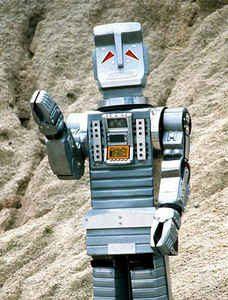
Marvin the Paranoid AndroidI think there is a lot of paranoia about Artificial Intelligence. Some of it is warranted but not for the reasons many would suspect. On Twitter, for instance, Elon Musk speculated that an AI system could choose to start a war “if it decides that a prepemptive [sic] strike is most probable path to victory.” In fact, he has said elsewhere that there needs to be regulations curbing AI. Here is where a degree in the humanities would be useful to folks like Musk. There are such laws – they are called Asimov’s Three Laws of Robotics:

  1. A robot may not injure a human being or, through inaction, allow a human being to come to harm.
  2. A robot must obey orders given it by human beings except where such orders would conflict with the First Law.
  3. A robot must protect its own existence as long as such protection does not conflict with the First or Second Law.

Of course, the whole point of Asimov’s “I, Robot” is to illustrate the ethical knots and unintended consequences of such “laws.” Currently, we are so specialized of a society, that there is no one individual who can manage this mischief. We need people like Asimov right now more than ever – people who can think about ethics and consequences.

AI will not destroy us. Our ignorance will do that for us. If we are stupid enough to put algorithms in charge of The Bomb, then we will get exactly what we deserve. Darwin will have done his work. We need to make decisions about politics, business and international relations, but we are woefully under-equipped right now to make those decisions. Trump is in office because of the failures of our education system – the specialists understand the data and analytics – but they don’t understand the bigger picture. The Russians and other actors will take advantage of our political and sociological ignorance, as well as our critical technological illiteracy. We have plenty of programmers out there – we need to think about the humanities and the digital world in new ways. I think that future professionals (teachers, programmers, doctors, administrators, etc.) should not only have a grounding in the humanities but also in technology (Harvard’s open course CS50 for instance). We also need philosophy courses for programmers and poets.

There is a theme in the humanities that you can pick up if you stick with it long enough: humans will go to inordinately absurd lengths to abdicate their responsibility for their choices or actions (or their refusal to act). Blaming AI for any of our ills is just ridiculous – it is like blaming a car for our bad driving. AI is just a tool, and we need to do everything we can to understand the tool and the choices innovation affords.

Posted in AI | Tagged , , , , , | Leave a comment

Making Connections with Afghanistan in Kent

An old bazaar scene in Kabul City, Afghanistan.

An old bazaar in Kabul City, Afghanistan. (Wikipedia)

We had Emily Campbell’s ESOL class join my class today to discuss Afghanistan. I had a serendipitous meeting that took all of four minutes in the copy room – I mentioned that my students were working on a paper about Afghanistan and she told me that she had students from Afghanistan. We emailed back and forth for a bit and then agreed that they should all get together and talk about who they are, how long have they been in the U.S., and what should Americans know about Afghanistan. It was a very successful meeting. My students got a chance to meet students from Afghanistan, Iraq and other countries, and put a human face on to the headlines we have been reading about.

Each quarter my students in Language Arts/Social Studies write about critical areas in the world that are in the headlines. This serves a couple of purposes: first, it keeps the curriculum current and relevant. Second, it gets rid of all of the gun control and abortion papers that many of the students have already written in high school and are often available for download. Lastly, it helps them to figure out that social studies is a living subject and that history is made everyday by real people.

For the Afghanistan assignment, we read a profile of Afghanistan, watch the film “Children of the Taliban,” we read four positions on Afghanistan, and we bring in news articles for discussion. The students pick a possible solution to the war, write a short paper on it, and then present it in class.

I learned from the students that my curriculum for this assignment needs to be updated. I take that very seriously and am currently working on that. I was worried at first that students might not be willing to talk about something so personal. Some of them had lost family in the wars in Afghanistan. But that was not the case: it was a good conversation, and my students asked good questions.

This is why I got into education in the first place: learning is about making connections between information, ideas, and people. It is about building relationships and connecting with one another.

Posted in education | Tagged , , , , , | Leave a comment

Translating the Voynich Manuscript and Other AI Puzzles

There are a number of silly stories out there right now about Artificial Intelligence. None more silly than AI translating the unintelligible Voynich Manuscript (such as the one in News Week). The Voynich Manuscript is from 15th cent. and is basically written in its own language (or possibly a coded version of an existing language). Its meaning has eluded linguists, lexicographers, and cryptographers for over a hundred years. The rabbit hole of an article in Wikipedia on the Voynich Manuscript is a sufficient introduction. The “translation” of the the manuscript sounds a lot like the bad, early mistranslations of Summerian tablets, Egyptian hieroglyphs, or even Ezra Pound’s erstaz Chinese. Here again we have an example of the problem with AI – we provide questionable or incomplete input into a computer and believe that we have an accurate result based on our faith in the algorithms.

I have an Amazon Echo Dot at home that I got from my brother-in-law for Christmas. A simple translation search via Alexa cleared the Voynich translation up very neatly. When I asked her to translate the first sentence she claims it means “I am sorry. I do not have enough information on that.” This is a strange way to begin a book, but there could be some missing pages. It also seems that they used a “404” numbering system. Which either means it is a five-based numbering system or one that is 404 based.

A page from the mysterious Voynich manuscript,...

A page from the mysterious Voynich manuscript, which is undeciphered to this day. (Photo credit: Wikipedia)

I don’t think those doing textual analysis on the Voynich manuscript believe that they have translated it. If you read the stories, they believe that they have made an advance. But that would not generate traffic would it?

Posted in AI | Tagged , , | Leave a comment

Some Notes on the Phenomenology of Artificial Intelligence

There is currently no consensus on how closely...

I can’t believe it’s not intelligence!

I am not a fan of the term “artificial intelligence.” I know that is my peculiar problem – usage of a term will define its meaning long before or after logical precision gets to take a stab at it, and I have not yet come up with a satisfactory alternative. What is my problem with the term? To begin with, we do not really know what intelligence is, so how can we make an artificial version of it? AI is basically a set of algorithms that, for the most part, behave as they are expected to behave – there is nothing “artificial” about that. And if you believe that the mind is essentially a set of pre-programmed algorithms, then yes, computers are intelligent. But there is nothing in the fields of psychology, neurology, or philosophy, not to mention computer science, that would suggest that this is the case. A lot of this hinges on how you define “intelligence.” For instance,Wikipedia defines intelligence as “one’s capacity for logic, understanding, self-awareness, learning, emotional knowledge, planning, creativity, and problem solving.” Computers or software have no “capacity” for any of that. We can’t really use the term “Machine Intelligence” any more because that evokes images of clacking and sparking relay switches – the vision of the mind as a glorified pinball machine.

Defining intelligence is critical as we move forward with our reliance on algorithms and analytics since many companies and institutions are letting machines do their “thinking” for them. Some of the hugest catastrophes of the recent decades stem in some cases from the misapplication of data: examples abound from military intelligence to meteorological data that was just wrong. How do we define intelligence? Here is where the lack of a Humanities education on the part of our leaders, scientists and technocrats is becoming a real problem. There are more questions on the nature of intelligence than there are answers. What is the relationship between intelligence and consciousness? What about intentionality? (The power of minds to be about, to represent, or to stand for, things, properties and states of affairs). And how do we assess or measure intelligence or consciousness? The Turing Test is not really proof – it just shows that over the years we have become bad at carrying on a conversation. Go ahead, ask any computer if it prefers the Beatles or the Stones – it will not detect the false dichotomy inherent in the question (the real answer is “…Floyd” with a knowing nod). From the Buddhist perspective, all consciousness is emergent: life and consciousness essentially are synergistic – that is, they function at a capacity greater than the sum of their parts. What meaning you attach to that phenomenon is basically your problem. In Buddhism, there is no special qualifier that separates any form of intelligence from another. How can you create artificial consciousness or intelligence from something that is basically an illusion? And more importantly, what would that really prove? The only people who thought that Oleo was like butter in any way were marketers. No one else thought that – it was what was available to get down the equally tasteless thing that commercial producers call “bread.”

The field of neuroscience has revealed many of the mechanisms of the brain but has not really gotten around to defining intelligence or consciousness. I have run into neuroscientists on YouTube who are out to refute things like learning styles theory using smug phrases like “but this is not how the brain works.” Neuroscience seems to be the least humble of the sciences – can you imagine any other field where they would announce that they have finally figured it all out?

The history of computing runs parallel to a history of dystopian literature on artificial intelligence. It is not that I don’t believe in artificial intelligence, its that I do not believe that it is “artificial” or “intelligent.” Most of the models of intelligence that AI is based on are mechanistic visions of the human brain: they have to be because any other model of the human brain would preclude the ability of a computer to mimic it. Our fear and doubt  of computers and AI stretch way back to Descartes to 2001: a Space Odyssey.

There is a lot of paranoia around AI because folks seem to think that computers or software have become “intelligent” and that somehow they can work to our harm or detriment. This is simply not the case: AI is not going to hurt us – incompetent technology and business leadership, and incompetent applications of technology are what is going to hurt us. Our over-reliance on algorithms that were supposedly meant to help us, allowed human agents to seed fake news on Facebook and send inappropriate videos out to children on YouTube. How could such things have happened if we were all looked over by machines of loving grace?

The algorithms and data have a lot to teach us: they are useful tools – but they are not thinking. A definition of intelligence should also include the ability to make ethical choices. We are the ones that think and it is dangerous to project that capacity onto un-reasoning software and machines. This is not an abstract philosophical discussion – machine intelligence is driving everything from markets to cars. With innovation, it is never a question of should we do it (someone always will): it is more of a question of the how. The devil hides in the details of implementation. We always seem to be too excited to find some new way to abdicate the responsibility of our choices.

Finally, if you are still overly-impressed with algorithms and data, please read Arthur C. Clarke’s “The Nine Billion Names of God” because there is always a last time for everything.

Posted in AI | Tagged , , , , , | Leave a comment

Tips for New Teachers?

A spiral clock.I would not have made it in my first year as a teacher without the generosity and collegiality of the more experienced instructors I had the privilege of working with. I uses to begin each year with a posting on Time Saving Tips for Teachers which used to be about how to save time teaching online, but I found that most of the tips were being used in face to face classes as well.

What resources do you send to new teachers?

Some websites & resources that I have found invaluable for online teachers include:

I found that searching for the assigned textbook title in quotes and then adding the word “syllabus” gave me a good idea about how teachers were using a particular textbook.

What about you? What teaching tips do you have for new teachers? How do you streamline your online teaching process? Leave a comment below if you have any time saving tips. Let us know in the comments below!

Posted in education | Leave a comment

Open Education for a Better World

logo of University of Nova GoricaI am excited about this and have volunteered to be a course mentor. Whenever someone hears me talking about OER coming from the community rather than a publisher, this is what I mean: the University of Nova Gorica and UNESCO Chair on Open Technologies for OER and Open Learning are launching a new, free and exciting international online “Open Education for a Better World” mentoring program.

The first round will take place from January to July 2018. Candidates with concrete ideas for open e-learning courses aligned with SDG goals were invited to apply by Oct. 20th of this year. Fifteen instructors will be chosen to be guided online towards the development and implementation of their course.

Together with a course mentor, they will design and implement an open e-learning course that will benefit many at no cost to participants. Applications from all over the world for courses in different languages were expected.

What I like about this project is that it short-circuits all the “sustainability” hand-wringing by relying on good old-fashioned collegiality. This is my chance to give back to the academic community. I was blessed back in the early 90s by meeting teachers early in my career who freely and openly provided me with their expertise, materials, and support. I want to pay it forward and this looks like a great opportunity.

Posted in education | Leave a comment

MOOCs, Student Success, and Instructional Design

Picture of a compass.One of the common problems with online learning and MOOCs is student success and retention. Traditionally, there is a large gap between the success and retention rates of face-to-face and online courses. Just as some students need help in understanding how online education works (motivation, time management, study skills, etc.), students new to online learning will also need help in understanding how to successfully take a MOOC.


According to my research, the most common cause of this gap is lack of student preparation: students have spent 12 years learning to be face-to-face students and very little time learning how to be effective online learners. To address this in our online courses at various colleges I have worked for, I created a free, fully online, two-week courses, one for instance at College of the Redwoods, called DE 101 (Distance Education 101). This course addressed the technical and learning skills needed to be effective online learners. All of the technical and metacognitive skills needed to be successful were built into the assignments. The design for this course was based on a Health Information Management course that I designed and co-taught with Char Gore at Tacoma Community College. That course was designed to introduce students to new technology, learn how to leverage online technology for their education and professional development, create intelligent networks, and, even more significantly, how to manage technological change. My experiences with MOOCs has reinforced my conclusions:

  • Students need help in learning how to be independent, self-motivated learners.
  • The skills of successfully taking online courses can be taught.
  • Online courses can facilitate peer networks that not only help the students through a course but help them learn long after the course is over.

I would like to further develop these course materials into a MOOC for students (open to any college student or anyone interested in online teaching and learning), a handbook on peer learning and networks for students, and an instructional design guide and rubric for teachers interested in MOOCs. All of this would be under a CC-by license.

The MOOC will be facilitated and curated by instructors and student mentors, but the students will be guided towards taking a lead in research and discussions. The handbook on peer learning will be an on-going project in the MOOC and will be licensed with an open Creative Commons license, as will the instructional design guide and rubric. It has been my experience with the “traditional” online versions of these courses that even other instructors often wish to participate to help them learn more about how students learn online. It is not enough to build a course that demonstrates the features of a learning management system.

This project will not only help students learn to navigate the new world of online learning and MOOCs, but help instructors understand new roles for teachers as facilitators, curators, and guides to online learning. The links below map the growth of these ideas from the HIM course to DE 101 to what will become the eLearning 101 MOOC. I will be building this out in WordPress and will link the site from here.

If you are interested in participating or contributing to this project, let me know in the comments below or shoot me an email.

Other relevant posts:

Posted in education | Tagged , , , , , , | Leave a comment